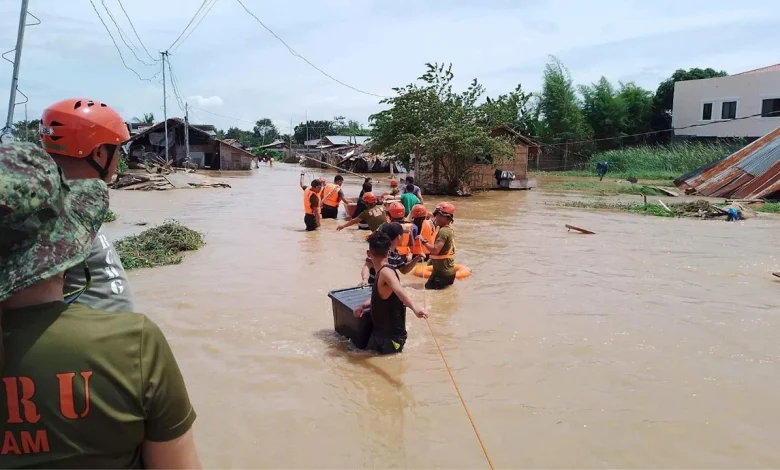
PHILIPPINE ARMY FACEBOOOK ACCOUNT
(First of three parts)
THE PHILIPPINES is haunted — not by spirits, but by the ghosts of warnings ignored and promises broken. For decades, scientists and global institutions sounded the alarm: climate change would bring stronger storms, rising seas, and catastrophic floods. The United Nations (UN) and the Intergovernmental Panel on Climate Change (IPCC) urged nations to act, emphasizing that developing countries like the Philippines must prioritize adaptation.
Yet here we are, facing the same devastation year after year. Why? Because adaptation — the shield that could have saved lives — remains weak, underfunded, and often lost in the maze of bureaucracy and corruption.
“Ghosts We Have to Face” is a trilogy about these failures. It is about the signs we saw, the commitments we made, and the reality we now endure. It is about ghost projects — flood control systems that exist only on paper — and the haunting truth that the government has failed to protect its people.
This series unfolds in three acts:
1. The Warning of Climate Change – How decades-old alarms from the UN and IPCC foretold the crisis we now face.
2. The Ghosts We Live With – A haunting look at recent typhoons like Uwan and Tino, and the phantom flood control projects that never came to life.
3. The Help; The Demand – The urgent call for accountability, climate justice, and a shift from reactive recovery to proactive resilience — ending the political tug-of-war, the civil war of priorities, and the drama that only benefits those in power.
PART 1: WARNING OF CLIMATE CHANGE
“There will be floods, one after another. Be prepared.”
For decades, the world warned us. Scientists, the United Nations, and the IPCC sounded the alarm: climate change would bring stronger storms, rising seas, and catastrophic floods. The message was clear — prepare now, or pay later. Yet here we are, still drowning in the same cycle of devastation.
In 1988, the United Nations created the Intergovernmental Panel on Climate Change (IPCC). Its first report in 1990 warned that unchecked greenhouse gas emissions would lead to rising seas, stronger storms, and irreversible damage. By 2007, the IPCC declared climate change “unequivocal,” predicting that Southeast Asia would suffer more intense typhoons and flooding.
The Philippines was repeatedly named among the most vulnerable nations. Our geography — on the typhoon belt, the Pacific Ring of Fire, and with low-lying coastlines — made us a prime target. Yet, despite these warnings, adaptation planning remained slow, fragmented, and underfunded. Government agencies acknowledged the threat — but acknowledgement without action is negligence.
NUMBERS BEHIND THE WARNINGS
• 30+ years of warnings: IPCC reports since 1990 have consistently flagged Southeast Asia as high-risk.
• 20 typhoons per year: on average, the Philippines experiences 20 tropical cyclones annually, with five to seven making landfall (Pagasa Annual Report).
• 6,300 lives lost: Typhoon Yolanda (Haiyan) in 2013 killed 6,300 people and caused P95 billion in damages.
• P1.3-trillion economic loss: Between 2010 and 2020, climate-related disasters cost the Philippines P1.3 trillion in damages.
With these past events, can’t we say these warnings should have been enough?
THE PREPARATION
We said we would prepare. We signed the Paris Agreement in 2015, pledging to cut emissions and build resilience. We created the Climate Change Commission in 2009 under the Climate Change Act. We drafted the National Climate Change Action Plan in 2011. We accessed climate funds. We promised flood-control systems, early warning systems, and resilient infrastructure.
On paper, it looked like progress. In reality it was a patchwork of plans, delays, and ghost projects — initiatives that existed only in reports, not in communities.
As UN Special Rapporteur Ian Fry noted after his visit to the Philippines, “Despite numerous policies, the government is still coming up short in implementing these laws… It is without doubt that the Philippines is one of the most vulnerable countries to the impacts of climate change.”
THE ASSESSMENT
Were we really ready? Typhoon Yolanda killed over 6,000 people in 2013. Typhoon Ulysses submerged Metro Manila in 2020, displacing 1.7 million Filipinos. Each disaster exposed the truth: our preparations were not enough. Many projects were unfinished or abandoned. Coordination among agencies was poor. Local governments lacked technical capacity. Corruption eroded trust.
The science existed. The policies existed. The action did not.
THE ECONOMIC AND HUMAN COST
The World Bank’s Climate and Development Report (2022) warns that climate shocks — whether sudden typhoons or slow-onset trends like rising seas — will cripple economic activity, damage infrastructure, and deepen social disruption.
Current annual losses from typhoons already reach 1.2% of GDP, spiking to 4.6% in extreme cases like Yolanda. Without decisive action, damages could soar to 7.6% of GDP by 2030 and 13.6% by 2040.
Temperatures have risen 0.68°C since 1951, and projections show an increase of 1-2°C by 2100, bringing stronger storms and unpredictable rainfall. Yet, institutional fragmentation and weak local government capacity remain major barriers to effective climate action.
Now, the question haunts us: Can we fix this? Can the Philippines still rebuild resilience — or is it too late? Every peso spent on rebuilding what could have been prevented is a peso stolen from the future. The ghosts of past warnings demand an answer.
THE HARD TRUTH
The Philippines is not failing because of ignorance. We knew. We were warned. We signed agreements. We created agencies. Yet, decades later, we face the same floods, the same deaths, the same despair.
Why? Because climate action has been trapped in a political tug-of-war — a civil war of priorities — a drama that only benefits those in power. While leaders argue, communities drown. While budgets are politicized, families lose homes. This is not just inefficiency; it is injustice.
The ghosts of past warnings haunt us because our leaders chose short-term politics over long-term survival.
THE FINAL CRY
Now, we need to answer the cries of future generations who will inherit this problem. Who is to blame? Silence is complicity. Accountability is not negotiable — it is a moral imperative. Someone must answer for decades of broken promises and ghost projects. If no one is held responsible, then the cycle of disaster will never end.
If warnings become ghosts, what happens when broken promises turn into graves? We’ll unearth that in the second part of the trilogy.
(To be continued.)
Lucky Wilmar L. Cimatu is the senior managing consultant for the Advisory Services Practice Area at P&A Grant Thornton, one of the leading audit, tax, advisory, and outsourcing firms in the Philippines.
business.development@ph.gt.com
www.grantthornton.com.ph