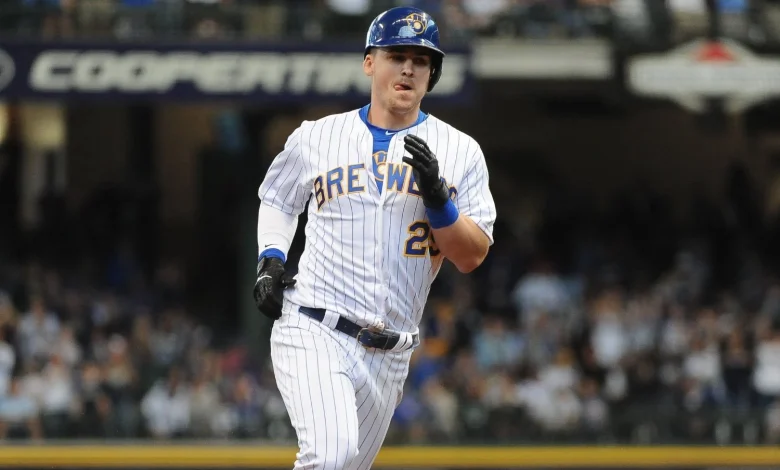
The Chicago Cubs have agreed to a one-year, major-league deal with first baseman Tyler Austin, according to a report from ESPN’s Jeff Passan. Austin, 34, carried a colossal 36.9% strikeout rate over parts of four previous seasons in the majors, and last appeared in the States in 2019. Since then, he’s played for the Yokohama Bay Stars of Nippon Professional Baseball.
When last he did play in the American majors, Austin was one of Craig Counsell’s charges for the Brewers. He drifted around in his final years before going to Japan, but found a home and made some major improvements as a balanced slugger in NPB.
According to Yakyu Cosmopolitan, which keeps advanced NPB stats, Austin made contact on 85.1% of his swings within the strike zone in 2025, and chased fewer than 20% of pitches outside it. Even before going to Japan, he was an exceptional hitter against left-handed pitching, with a .253/.345/.539 line in 255 plate appearances against them.
That will be virtually his only role for the 2026 Cubs. He profiles gorgeously as a lefty-mashing right-handed complement to star slugger Michael Busch, a lefty who struggles against southpaws. He can also find playing time as the designated hitter against lefties, moving Seiya Suzuki to right field and avoiding the need to play either Moisés Ballesteros or Owen Caissie against them, should Counsell prefer Busch to one of the two on a given day. He figures to come off the bench to pinch-hit for one of those three lefty batters fairly frequently, too, as long as his return to the States works out.
Austin will come much cheaper than previous players the team has signed to fill the same role, a cast that includes Justin Turner ($6 million for 2025) and Trey Mancini ($14 million over the two previous seasons). Jon Heyman reports that he’ll receive just $1.25 million, before incentives, making that roster spot a cheap one and leaving the team ample resources as they pursue a middle-of-the-order bat and an upgrade for the front half of their starting rotation.
If they do achieve a major upgrade to the lineup, it’s likely to come at third base, anyway, so Austin does nothing to materially gum things up on that front. He occupies a roster spot that will have little defensive value or flexibility, but which also demands little. As the team ponders ways to make the remaining improvements they need, this move saves money in one place for spending in another—while capturing some matchup-based upside.