WASHINGTON STATE — Gov. Bob Ferguson unveiled a sweeping $2.1 billion proposal to bolster preservation and maintenance of the state’s roads and bridges, along with another $1 billion for new ferries.
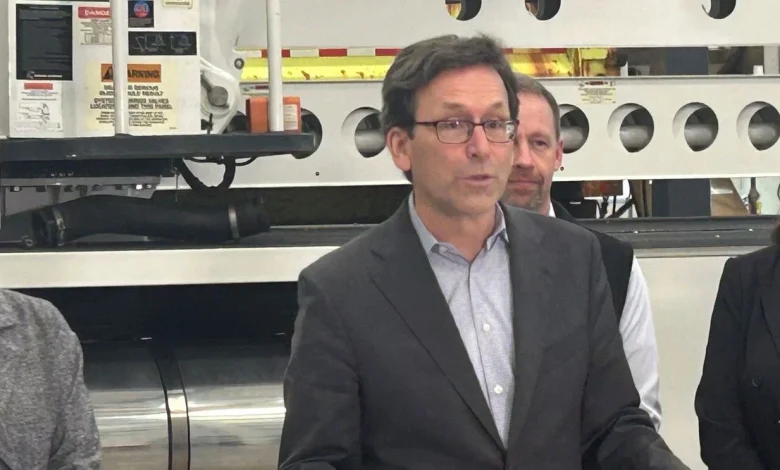
“This is the largest investment in preservation compared to any enacted budget of the last two decades,” Ferguson said at a news conference on Friday at a Washington State Department of Transportation maintenance facility in Lacey, where he was joined by WSDOT Secretary Julie Meredith, labor leaders, and local officials.
Ferguson said the $2.1 billion is aimed at preventing costly emergency repairs and closures by funding routine preservation work now.
“To be blunt, the state has neglected its core transportation infrastructure for too long,” Ferguson said.
RELATED: ‘The impact on our infrastructure is profound’: Gov. Ferguson talks flood damage, recovery
The governor outlined a high-level breakdown of the proposal, which includes $1.1 billion for bridge preservation, $164 million for paving projects this coming summer, $756 million for paving over the next decade, and $160 million for slope stabilization, culvert repairs, and other resilience projects.
“Keeping our roads and bridges in good condition saves money, helps working families, and keeps our economy moving,” he said.
Ferguson added that the budget process will determine the specific projects that receive funding once the state Legislature convenes next month. WSDOT Secretary Julie Meredith said the agency is prepared to deliver the work if the Legislature approves the proposal, noting that preservation has been a top agency priority since she took the job.
“This investment is critical, responsible, and the right thing to do,” Meredith said, adding that WSDOT has moved from storm response to recovery in recent weeks and has reopened more than 80 roads affected by severe weather.
Heather Kurtenbach, executive secretary of the Washington State Building & Construction Trades Council, framed the investment as a jobs and apprenticeship opportunity.
Secretary of Transportation Julie Meredith says the damage from recent storms and flooding only adds to the transportation needs around the state. (Photo: KOMO News)
“When the state invests in its infrastructure, it invests in people,” she said, calling the plan “a big win for Washington’s working families” and saying it would create family-wage jobs and expanded apprenticeship pathways.
Anthony Wright, mayor-elect of Enumclaw, described the human toll that follows infrastructure failures. He recounted the economic and daily-life disruptions caused by recent bridge closures, the strain on small businesses, and how commuters, seniors, and pregnant women were forced to alter plans.
“Infrastructure means access,” Wright said, urging lawmakers to consider local impacts when prioritizing projects.
Ferguson repeatedly linked the preservation plan to recent, historic storms that have caused widespread flooding and infrastructure damage across the state, saying the events “underscored the importance of this investment in light of what’s happening.” State officials are pursuing federal disaster reimbursement and said discussions are ongoing about what federal assistance may be available.
Gov. Bob Ferguson highlighted key transportation investments he will push for in to preserve and maintain the state’s roads and bridges, many of which are in dire need of repair. (Photo: KOMO News)
Administration officials warned that the $2.1 billion would not cure all backlog problems. Ferguson said the duration of a typical bridge is about 80 years and pointed out that 342 state bridges are that age or older, with 80 of those rated in “poor” condition. Delaying preservation work can multiply costs when full replacements are required.
“Painting a bridge or sealing a road may not seem very exciting, but it’s like changing the oil in your car,” the governor said.
Ferguson said the proposal would be financed by bonding capacity tied to existing revenue streams and would not tap the state’s general operating fund or require new taxes beyond what is already in place. The plan will go to the Legislature, where lawmakers must decide how to allocate the money statewide.
Ferguson’s preservation plan must be approved by the Legislature. If enacted, the funding would be spent over the coming decade.