
What if the cloud actually orbited, and your neighbors did too? Jeff Bezos says the countdown is on, with a 20-year timeline that could upend energy, industry and who gets a ticket.
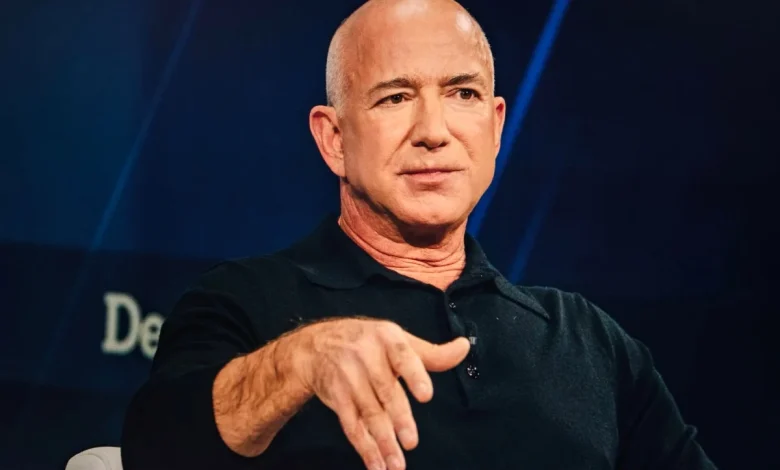
Speaking in Turin at Italian Tech Week alongside John Elkann, Jeff Bezos swapped quarter-by-quarter talk for a sweeping roadmap. Blue Origin is cast as the workhorse, from the New Glenn rocket and Orbital Reef station to the Blue Moon lander and plans to tap lunar resources. The playbook extends to off-planet data centers powered by space-based energy, a shift he says could supercharge AI and robotics while easing Earth’s industrial footprint. He argues the economics will follow as lunar refueling and lighter-gravity logistics reshape how space infrastructure gets built.
Jeff Bezos imagines a future among the stars
What if, within just 20 years, humans could call space their home? This bold vision, shared by Jeff Bezos during Italian Tech Week, blends science fiction with potential reality. The founder of Blue Origin believes millions of humans may live in space, supported by groundbreaking technologies in artificial intelligence, robotics, and lunar industrialization. Is this the start of humanity’s greatest leap?
Optimism and technology: Bezos’s formula for the future
While some fret about the rapid pace of technological advancements, Bezos advocates for optimism. Speaking with John Elkann, president of Ferrari and Stellantis, he described the convergence of AI, robotics, and space exploration as key to redefining our future. From intelligent systems to automated spacecraft, these innovations are not merely tools, they’re enablers of a thriving off-planet existence.
Blue Origin’s blueprint for space living
Central to this dream is Blue Origin. Bezos’s aerospace company is already pushing boundaries with various ambitious projects:
- New Glenn Rocket: A heavy-lift launcher targeting debut flights, with NASA access enabled under the 2022 VADR contract framework and commercial missions in the queue.
- Orbital Reef: A commercial space station concept backed by a 2021 NASA Commercial LEO Destinations agreement, where businesses and tourists might someday coexist.
- Blue Moon Lander: Selected by NASA in May 2023 to provide a human landing system for Artemis V, positioning the vehicle as pivotal for future lunar missions.
But it doesn’t end there. Blue Origin is exploring ideas that sound straight out of a sci-fi novel. Industrializing the Moon, for example, would provide a base for mining resources and possibly refueling spacecraft amid lower lunar gravity. These steps could dramatically reduce the costs of further exploration.
Harnessing space for Earth’s challenges
Bezos doesn’t just see space as a new frontier for habitation, but also as a solution for Earth’s growing needs. He has floated concepts such as relocating data centers to orbit to tap space-based energy while cutting terrestrial power use. Imagine AI systems running on an extraterrestrial grid, efficient and sustainable, tying technological progress to environmental stewardship.
An industrial revolution in the cosmos
One question remains: how economically viable are these plans for the near future? According to Bezos, the numbers could add up within 2 decades. Space infrastructure might transform heavy industries, moving pollution-prone operations away from Earth while boosting innovation in robotics and energy solutions. This isn’t just about colonization, it’s about reshaping civilization itself.
Bezos’s vision isn’t just an aspiration; it’s a profound challenge to humanity. Millions living in space by 2043 may sound ambitious, but step by step, such a future seems increasingly within reach.


