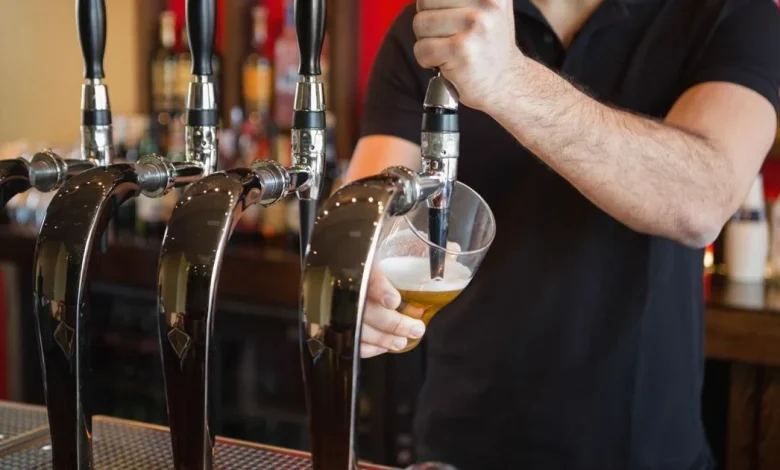
Whether you know it or not, Americans are drinking less. This year, the percentage of Americans who say they drink alcohol has fallen to a record low. But don’t kid yourself, 54 percent of Americans said they still do drink booze, according to a recent Gallup poll, which has been tracking U.S. drinking since 1939.
I can hear Bill Wilson, the father of Alcoholics Anonymous, cheering from his grave. The trend of easing off the booze has been in place for several years among some segments of society. Health care concerns are reportedly spooking the population. It used to be that “one or two drinks a day” was OK.
I’m sure the liquor companies lobbied hard for that verdict, but the attitude has reversed. Thanks to recent research, alcohol at any level could be hazardous to your health, exposing consumers to an increased risk of cancer, depression and anxiety.
And as usual, it is the younger generations that have paved the way. Their abstinence evolved a decade ago and has now settled at an even 50/50 this year among 18- to 34-year-olds. This compares to 56 percent among older Americans. At first, I suspected that youngsters simply switched from one drug to another, like marijuana, but the research says that ain’t so. Marijuana use is higher than it was before it was legalized, but consumption today has seen a steady decline over the past four years as well.
Researchers believe that COVID-19 had something to do with the declining trend in alcohol intake. During the pandemic, alcohol consumption skyrocketed, especially among older adults. Fear, boredom, and isolation triggered excess drinking. Their children were locked down with adults, and they witnessed their parents lose control due to their daily drinking.
The government launched an education campaign warning of the impact of excessive drinking and advising on how to stop, or at least moderate, drinking. The media chimed in, especially on social media, and before long, there was a generational shift in perception from drinking is OK to not OK.
The thinking went from it might still be acceptable to drink, but losing control in public was a sure way to be filmed on a hundred phones and posted on social media in minutes. That would be devastating and avoided at all costs. It is no longer cool to drink, especially in excess to the point of inebriation, because that was what parents did.
But there were other reasons as well. Although beer is still the beverage of choice among the population, youngsters did not want to be seen drinking something their parents consumed, like craft beer. Besides, alcohol in any form has become too expensive for many.
With all this new adverse research data, one would think that both the beer and liquor industries would be sucking wind. They are, but the trend is still not life-threatening. In fact, on average, according to IWSR, a global leader in alcohol beverage data, the overall number of drinks U.S. adults have per week has not changed in decades, hovering between 10 and 12 since 1975. It did admit that it was the lowest level in 30 years.
To survive, the beer industry is busy stabilizing its customers’ consumption through marketing and advertising, while at the same time looking to the future. It is shifting along with consumer habits by rolling out nonalcoholic versions of its leading beer brands. Beer volume has been flat or declining since 2007. It is only growing by a mere 1 percent on average, but that is better than wine and the hard stuff.
The wine and hard liquor sector has had mixed results. Wine volumes this year have been in decline, experiencing over an 8 percent decline in both volumes and revenues. The spirits side of the beverage industry has suffered slightly fewer declines. But there are bright spots. Tequila and Mezcal, for example, are performing well, as are sales of ready-to-drink alcoholic beverages.
Of course, one should expect the industry to counterattack, and they are. Talker Research (on behalf of Josh Cellars, a wine producer) announced survey results in November. Of 2000 Americans, aged 21-44, polled, they found that 77 percent expect to drink the same amount or more alcohol during the holidays this year.
They also reported that nearly 80 percent of Gen Z and millennial respondents (who drink) will consume more alcohol during the holidays than at other times of the year. Well, good for them. After all, I can see the desire for sipping a hot toddy as A Christmas Carol plays in the background or toasting the New Year while watching the ball drop in Times Square.
However, overall, I applaud the younger generations for becoming a lot smarter and much sooner than we Baby Boomers. For me, I raise my glass of sour cherry juice and say, “Here’s looking at you, kid.”