Kumail Nanjiani opens up on his regrets, critical failures and embracing fear : Wild Card with Rachel Martin

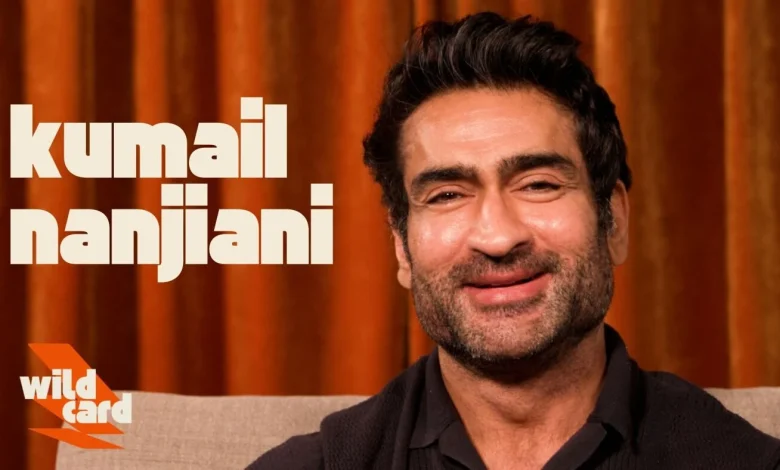
RACHEL MARTIN, HOST:
How big of a role does fear play in your life?
KUMAIL NANJIANI: Big.
MARTIN: Big?
NANJIANI: My relationship to fear has changed, or I’m trying to actively change it. Fear used to be something I would try and avoid, and now fear is something I court.
(SOUNDBITE OF MUSIC)
MARTIN: I’m Rachel Martin, and this is WILD CARD – the show where cards control the conversation.
(SOUNDBITE OF MUSIC)
MARTIN: Each week, my guest answers questions about their life, questions pulled from a deck of cards. They’re allowed to skip one question and to flip one question back on me. My guest this week is Kumail Nanjiani.
NANJIANI: It took me a while to understand that I am very, very sensitive and that that’s OK. Like, having big feelings that make me feel alive, it’s the goal. It’s not something to avoid.
MARTIN: Here’s my theory about Kumail Nanjiani. He is not a person who’s afraid of his feelings. I think he’s actually the opposite of that kind of person. Kumail has made his emotional life part of his comedy, whether it’s his deep and abiding love for his wife, as told in the hit movie “The Big Sick,” his obsession with his cat or the anxiety that grips him in the middle of the night. Kumail’s brand of comedy is often about how we feel our way through living. His new stand-up special is on Hulu, and it is called “Night Thoughts.” It is very funny, and I am so happy to welcome Kumail Nanjiani to WILD CARD. Hi.
NANJIANI: Hi. Thank you for having me. What a lovely introduction (laughter). Thank you.
MARTIN: You’re welcome. I genuinely am so pleased to get to talk to you. You were one – I’ll just tell you. You were one of, like, the top 15 people, is that, like, a rude thing to say? You made the top 15 of people when I started this show that I was like, I definitely want to talk to Kumail for this show.
NANJIANI: Oh. Thank you. That’s lovely.
MARTIN: But now, after I say that out loud, it feels weird that I didn’t say, you were, like, the top five. I’m like, the top 15.
NANJIANI: Or the top 10, right.
MARTIN: (Laughter).
NANJIANI: Top 10 lists happen.
MARTIN: Or the top 10.
NANJIANI: But I – you’re the top…
MARTIN: Like, the top 10 is normal (laughter).
NANJIANI: Yeah, you’re the top 17.
MARTIN: 17.
NANJIANI: I think I know what number I am.
(LAUGHTER)
NANJIANI: Well, thank you. That’s very kind of you.
I meant that as a compliment. I meant that as a compliment
NANJIANI: It is a compliment. I’ll take it as a compliment.
MARTIN: Yep. OK. So are you ready to just do this? Just…
NANJIANI: Let’s do it.
MARTIN: …Leap in? OK.
NANJIANI: Yeah.
MARTIN: We got three rounds. The first round is memories. Here we go. One, two or three? You choose.
NANJIANI: I’ll go one.
MARTIN: One. Were you intimidated or excited about leaving your parents’ house?
NANJIANI: Intimidated, zero excited. Very, very…
MARTIN: Zero?
NANJIANI: Zero excitement in that moment, in the weeks leading up to it and the weeks after. Terrified.
MARTIN: Give me the context. How old were you when this happened? What was the context?
NANJIANI: I would have been about 18 or 19. I was coming to the U.S. for college and that – which had always sort of been the plan since I was a little kid. Like, they put me in a school starting from the sixth grade on, where most of the instruction was in English. And Urdu – which is the language I grew up with, which is my first language – was its own subject.
MARTIN: We should just say you were coming from Pakistan. Urdu was your…
NANJIANI: I was coming from Karachi, Pakistan.
MARTIN: …First language, Pakistan.
NANJIANI: That’s right.
MARTIN: Yeah.
NANJIANI: We should say that. Karachi, Pakistan. I was 18 or 19. I got into a school called Grinnell, which I didn’t know anything about Iowa ’cause I had not watched “Field Of Dreams” at the time.
MARTIN: (Laughter).
NANJIANI: And I…
MARTIN: Then you did, and you knew everything.
NANJIANI: I – well, I got there, and I was like, oh, this is different from what had been advertised to me in the films I had seen.
MARTIN: (Laughter).
NANJIANI: I was just very, very scared to leave. I was very much, you know – I was sort of a mama’s boy, parent’s boy kind of thing. I wasn’t, like, a very social, going out kind of kid. I was very – still am very close with my parents, but, you know, I was someone who never got in trouble, studied really hard.
MARTIN: Yeah.
NANJIANI: It was very important to me to be, like, a good kid. You know, my wife, Emily, who you mentioned in the intro, is – was not like that. She was very rebellious. She was sneaking out of the house in the middle of the night. That was not me. And so, very close with my parents, very much like mama’s and daddy’s boy, all that. And so when I was about to leave, it was really, really – I really hated it. I was really, really scared. I wished I wasn’t doing it.
MARTIN: You didn’t want to go?
NANJIANI: I did…
MARTIN: Did you go just because you loved your parents and you knew that this was the expectation that had been set?
NANJIANI: This was the expectation that had been set, and up until sort of, you know, when the rubber met the road, up until when leaving became a reality, I was excited about coming to America. I was like, yeah, I’m going to go there for college. This is what I want to do. It’s just when it became real, and now it – suddenly there are dates attached to it. And there’s, like, a reality to me leaving my – you know, I had never really been away from my parents for any extended period of time my entire life. I was very, very scared and I was very, very sad. And there’s a weird story attached to this. My last two years of school, the way it works is, the – I went to, like, the British system of schooling. So you don’t go into generally undergrad, you go right into med school or engineering school…
MARTIN: Got it.
NANJIANI: …Or whatever it is.
MARTIN: Yeah.
NANJIANI: So my last two years, I went to a different school ’cause they had a good program to get kids situated in American colleges. And so I don’t know any of the kids. It’s a new school. I’m sitting there for biology class. It’s the first day. Everybody’s talking. The teacher comes in, and she looks at us, and she goes, oh, my God, so many students. Because it was a popular subject, and she had too many kids in class, and she was unhappy about it. And I heard that, and I just went, huh? Like, that was just my normal reaction to it. Like, just a true reaction, not trying to mock her, nothing. I was just like, huh? ‘Cause she, like, had such a high-pitched voice, and she screamed it. And she’s like, who said that? And I was like, well, honesty is the best policy. I’m a good crit, so I raised my hand, and she was like, I’m going to make life very difficult for you. She said that to me in front of the entire class ’cause she wanted kids to drop the class. So for the next two weeks, she was particularly very specifically mean to me. She singled me out. She bullied me. She was like…
MARTIN: She wanted you out.
NANJIANI: She wanted me out. She wanted someone out. And I – she was like, all right, I know I can get this guy out.
MARTIN: Right.
NANJIANI: Why do you have that stupid look on your face? Why are you smiling like that? For two weeks. And at the end of two weeks, you know – I was – I’ve always been a very sensitive kid, and it’s come – it’s taken me many, many years to come to terms with that. It’s actually been sort of a recent thing that I’ve realized I’m very sensitive.
MARTIN: Right.
NANJIANI: So two weeks in, I was like, I don’t know if I want to be a doctor that bad. So I dropped my biology class, right? Cut to two years later, and now it’s time for me to go to America, and all of my really good friends are going to this really good med school in Karachi ’cause they didn’t drop biology.
MARTIN: Right.
NANJIANI: And I remember two years – as I was about to come to America, being very jealous and upset. I was like, I wish I hadn’t dropped biology, because I know in that moment, I’ve – I would have chosen to go to that med school in Karachi with all of my friends. Like, I know – with the girl I had a crush on, you know, she was going there. I just knew – I knew I would have stayed, and I was so hard on myself because I was like, I wish I had – I wish I had stuck it out and taken biology. And now, cut to so many years later, I come to America. I started doing stand-up comedy. Meet the love of my life, truly getting to live my dreams to a degree that I never thought I’d be able to live. And I look back and I think, if I hadn’t said that, huh? – my life.
MARTIN: What – who knows?
NANJIANI: …Would have been absolutely, completely different. I know I would have stayed in Karachi, and I know I would have gone to med school, and I know I would not be doing – I would not be here talking to you right now. So that’s…
MARTIN: I love those sliding door moments.
NANJIANI: It’s a total sliding door moment because I know it feels like, you know, I’m looking back and adding a narrative to it that wasn’t there. It’s not true. If I hadn’t said, huh? – I would not have dropped biology. I would have gone to premed. I would be a doctor right now. So yeah.
MARTIN: Here we are.
NANJIANI: Here we are. But the…
MARTIN: (Laughter).
NANJIANI: When I moved to America, you know – so I was very upset at leaving my – I remember landing in Des Moines, Iowa, and going, I don’t know anybody in, like, a thousand-mile radius of here. There’s is not a familiar face. Those first two weeks were very, very difficult. I couldn’t sleep. I was crying a lot. I remember one time I was trying to get my contact lens in my eye, and I couldn’t. And I, like, ended up tearing it. And I remember just, like, breaking down, sobbing and calling my mom and being like, I want to come home. I can’t be here. I want to come home.
MARTIN: Yeah.
NANJIANI: But it really was two weeks, and then suddenly I was fine. It just immediately, one day, I sort of just realized how to not…
MARTIN: You – well, did you decide? Did you just, like, consciously, like, this is where I am, so I’m just going to try to be happy here? Or…
NANJIANI: No.
MARTIN: No.
NANJIANI: I try now to have intentionality in my life. That, I think, I was at the mercy of whatever winds were sort of…
MARTIN: Yeah.
NANJIANI: …Hitting me. So it would have been lovely if I had come to some sort of epiphany, like, this is my – this is where I am and I have to accept it and I have to enjoy it. It was not like that. It just happened.
(LAUGHTER)
MARTIN: That is the truth most of the time when we’re talking about what our consciousness was in our 20s. Yeah, I don’t know that many of us were…
NANJIANI: Oh, my God. I’m telling you…
MARTIN: …As enlightened to be able to evaluate our behavior or choices.
NANJIANI: Yeah, I was totally at the mercy of whatever situation I was in. There were, like…
MARTIN: Yeah.
NANJIANI: I think, up until I was 30, I’d made three total decisions in my life.
(LAUGHTER)
NANJIANI: I think I had made three choices, and they all turned out to be great. But you know what?
MARTIN: That says something.
NANJIANI: I can…
MARTIN: You’ve got, like, good judgment, innate.
NANJIANI: I could – now that I’m thinking about it, I – only two. I can only think of two decisions I made up until I was 30 years old.
MARTIN: I mean, what were they?
NANJIANI: Starting doing stand-up and marrying my wife (laughter). Those are the only two decisions I can think of.
MARTIN: I mean, in terms of decisions, those are the ones you want to get right, right?
NANJIANI: Yeah.
MARTIN: Your career path and who you partner with forever. So good job.
NANJIANI: Yeah, I was…
MARTIN: It worked out.
NANJIANI: Yeah, I was making terrible food. I was eating, like, terrible meals, ’cause I was always choosing the wrong thing from menus. But when it comes to the big things…
MARTIN: (Laughter).
NANJIANI: …Two pretty good ones.
MARTIN: (Laughter) Oh, God. OK. Number two. One, two or three?
NANJIANI: Let’s go at three.
MARTIN: Three. What’s the riskiest thing you got away with as a teenager?
NANJIANI: Oh.
MARTIN: We’ve already established that you didn’t take many of them – or that’s how it seemed.
NANJIANI: No, I genuinely didn’t, and I think rebellion is encouraged here in a way that it was not where I grew up. I think part of, like, growing up here is going against your parents. There’s, like, a narrative for it, you know?
MARTIN: Yeah. No, totally. I think there’s a word. And, of course, now it’s escaping me. Individuating.
NANJIANI: Individuating.
MARTIN: I think that’s – I think that’s what they call it. Individuating. Oh, they’re not – I mean, sure, they’re, you know, tagging up public property and graffiti. But it’s – they’re individuating. Yeah.
NANJIANI: Yes. Yeah, we did not have individuating. I also think, I mean, it sort of goes into, you know, I think there’s a big emphasis in America on individuality, right?
MARTIN: Yeah.
NANJIANI: On personal freedom. Who are you going to be? You could be whatever you want to be.
MARTIN: Right.
NANJIANI: Pick yourself up by your bootstraps, that stuff. That was not really a narrative in Pakistan. We’re, like, a very, very family-based culture, you know, and we’re a very society-based culture. And a lot of that comes from religion, too, you know, where we don’t have the pressure to figure out what you’re going to do for the rest of your life ’cause what you’re going to do for the rest of your life is be Muslim. And so, like, your primary purpose for being is already established. Within that, what do you want to do? So there isn’t that much pressure to, like, follow your dreams or live those out – at least in my experience of it, you know?
MARTIN: Well, what if you want to follow your dreams?
NANJIANI: I think, you know, it’s a case-by-case basis.
(LAUGHTER)
NANJIANI: I mean, my parents have been very supportive of me following my dreams, and I think I got that leeway from them because I was a good kid.
MARTIN: Ah.
NANJIANI: I’ve been a good kid my entire life.
MARTIN: Yeah.
NANJIANI: So if my younger brother…
MARTIN: Right.
NANJIANI: …Who wasn’t as good a kid, if he was like, I’m going to do stand-up comedy, I think they’d be more worried.
MARTIN: Yeah.
NANJIANI: But me, I was always so, like, reasonable that they were like, all right, well, if he’s pursuing this, maybe there’s something to this.
MARTIN: Yeah.
NANJIANI: But they trusted me. My mom said, just don’t quit your day job, and then I did quit my day job (laughter), and they were like, all right, well, hope you know what you’re doing.
MARTIN: But this is such a good lesson for people who are listening, for young people who are listening or teenagers or my children. If you deposit enough good behavior…
NANJIANI: (Laughter).
MARTIN: …Into the piggy bank over years…
NANJIANI: Yeah.
MARTIN: …Then you get to cash it in. Like, eventually, the trust builds up, and then we’re like, sure, take the money out of the piggy bank. Go live your dreams. You deserve it.
NANJIANI: That’s exactly – and it wasn’t planned, of course. I just was who I was. I’m a real rule follower, and I always have been. And that’s what’s – what makes a good partnership between me and Emily is that, you know, we write together, we get notes from executives, and I’m always the one who’s like, let’s do them all. And she’s like, let’s do none of them. And then we find…
MARTIN: (Laughter).
NANJIANI: We find a happy medium, which leads to actually good work because some of the notes are good and some of the notes are not good, you know? Like, her, like, she’s always like, your people-pleasing is something you need to keep in check. And I do. I’m very, very aware of it now. But what were we – what was the question? What were we – oh.
MARTIN: What was the question? Risky – no. The question was, what’s the biggest risk you took as a teenager?
NANJIANI: As a teenager.
MARTIN: So there must be a tiny little thing.
NANJIANI: I mean, coming to America was a risk, right? I don’t mean to answer two different questions with the same response, but…
MARTIN: I mean, it’s pretty risky. I’ll give it to you.
NANJIANI: It totally was. It felt very risky.
MARTIN: Look at me judging your – like, this massive move to America. I’m like, yes, you know, pretty good.
NANJIANI: Yeah, that’s a pretty big one.
MARTIN: Oh, it’s huge.
NANJIANI: That’s a big one.
MARTIN: It’s huge. We count it. Yeah. No, that’s huge. We’re counting it.
NANJIANI: Yeah. Thank you. Thank you.
MARTIN: Yeah. You’re welcome. Yes, I bestow this upon you (laughter).
NANJIANI: But even that didn’t feel like a choice to me. Just felt like this is what I am doing. Like I said, I didn’t really feel like I had – I made any decisions. Even coming to America just felt like this is the track I’m on. And I’m not saying that my parents – it was the – as Emily says always, the call is coming from inside the house, you know, referencing “Scream.” Like, she’s always like, these expectations are not coming from other people. They’re coming from within myself.
MARTIN: OK. Last one in this round. One, two or three.
NANJIANI: Let’s go two.
MARTIN: Two.
NANJIANI: I’ve now picked out – yeah.
MARTIN: Oh, I feel like we talked about this.
NANJIANI: Let’s pick a different card.
MARTIN: Yeah. So this card is, what was a moment in your life when you could’ve chosen a different path, and that was so clearly your sliding glass.
NANJIANI: Yeah. Let’s go with one, then.
MARTIN: OK. How do you consciously try to emulate your parents?
NANJIANI: Well, my dad’s work ethic, for sure, is something that’s a big part. It’s something I really value. He’s been – you know, he was a doctor, but he worked in, like, a poor part of town. He had a clinic, but he would work long hours, and he would stay there until he’d seen everybody who was in line. So some days he was home at 8, and some days he was home at 10 p.m. So he was just there. And before we moved, before I came on my own, my dad actually – it was kind of heartbreaking – studied to become – pass, like, medical exams in the U.S. And when I was, I think, about 15 or so, he – the plan was to – all of us move to America, and then something happened where he didn’t get his visa in time. And the – he was going to do his residency here, and the hospital rescinded their job offer ’cause he didn’t make the orientation. So there was a period where we were, like, packed up and ready to go in two days. And then suddenly, they called and said, you missed the orientation.
MARTIN: Oh, my God.
NANJIANI: ‘Cause he couldn’t get his visa in time. But watching him study for that was very – it was inspiring because he would work all day. So he’d leave the house at 9 a.m. He’d come home at 10 p.m. He’d study after that. He’d study all weekend, and then he’d go to work. And he was just really truly burning the candle on both ends, and I remember watching him and being like, I’ve never seen anybody work this hard. And I think that’s something I intentionally must have internalized because that’s how I was. I would study all the time. And even now, the biggest, I think, asset I have is working really hard. Like, I prepare a lot. I – when I’m writing, I – and it’s something I’ve taken from Emily as well because I used to think of writing as this sort of thing where, like, you have to wait for God to speak to you. And she’s like, no, you got to go to church every day, and sometimes God shows up and sometimes God doesn’t show up.
MARTIN: Oh, that’s good (laughter).
NANJIANI: Yeah. It’s really, really good. Like…
MARTIN: Yeah.
NANJIANI: And she has a real ritual. She lights a candle every day. She sits down, and she will write from 9 a.m. to 5 p.m. every day. And I’ve learned – I’ve picked that up from her, too, and from my dad. So I think working hard. And I think from my mom, I’ve just – there’s, like, a really appealing softness to her where she’s, like, just a very, very compassionate person. And my dad is compassionate, too. I don’t mean to say that these qualities are mutually exclusive. But I think I’ve learned that from her, is just to be, like – just to be soft with the people around me. Sometimes I’m not soft to myself. But I think – and I also think I don’t want to get too much into specifics because it’s not my story to tell.
MARTIN: Yeah.
NANJIANI: But my mom has had to have a thick skin over the years. And just seeing how she’s been able to weather that has also been very useful, while retaining your softness, you know?
MARTIN: Yeah.
NANJIANI: You – I think that’s a tricky thing to…
MARTIN: Yeah.
NANJIANI: …Be able to navigate – staying soft while not letting certain things get to you that normally would lead you to harden.
MARTIN: Yeah.
NANJIANI: So I think those are the things I’ve picked up from my parents.
(SOUNDBITE OF MUSIC)
MARTIN: So now let’s push back from the game for a minute because I want to talk about your new special. Congratulations, by the way. It’s a big deal, right?
NANJIANI: Thank you. It is a big…
MARTIN: You haven’t done a comedy special in a minute.
NANJIANI: 2013 was my last one, and I just found out today Vulture named it the best comedy special of the year.
MARTIN: What?
NANJIANI: And it’s not even…
MARTIN: It’s not even out yet (laughter).
NANJIANI: Yeah. It’s been exciting. I just found out, like, a couple of hours ago. And, you know, it’s something I didn’t do for a while, and it’s something I’m very, very proud of. It’s not something I ever – I knew that I would do again. So to be able to do it again and be able to do it in a way that I can feel, like, proud of – like, at this point in my life, this is the hour of things I want to say to the world.
MARTIN: Yeah.
NANJIANI: It feels – I don’t know. It feels – it’s a nice feeling.
MARTIN: So you just said that you thought it was a thing you wouldn’t get to do again. Because you decided you didn’t want to do it? Because your acting career was taking off?
NANJIANI: Yeah. It sort of – it wasn’t a decision that I made to not do stand-up, but I just started doing stuff that, at the time, was much more satisfying for me because it was more challenging. So with stand-up, you know, I was getting to the point where – I mean, there’s always new stuff to learn. I’m not saying that I – but I felt a level of comfort with stand-up.
MARTIN: Yep. I get it.
NANJIANI: And I had it for…
MARTIN: You wanted to feel uncomfortable again.
NANJIANI: Yeah. So after we did “The Big Sick,” it was sort of like two things happening at the same time. One, I was getting more opportunities to act, and I was finding that to be exciting. But then also, as time went by, I started to get more and more intimidated at the thought of going back to it.
MARTIN: Ah.
NANJIANI: It started to really scare me. And when I would think…
MARTIN: And that’s when you’re like, I got to lean into that feeling.
NANJIANI: That’s what eventually happened, yeah. Because, to me, I really hated the feeling of, I used to be good at this and now I’m very, very scared of it. Like, I was like, I cannot imagine that at one point this felt like something that was easy for me, or that I at least thought was easy for me. So I hated that feeling. And it was just this thing in the back of my head that I was like, maybe someday I’ll return to it, but maybe I won’t. Because I’d seen a lot of actors who had started off doing stand-up comedy and then never gone back to it. Now, I’m talking about people who are legends and icons. I’m not comparing myself to them at all. But I’m saying, you know, people who started stand-up who never went back to it, that list is pretty intimidating. It’s – you know, it’s Eddie Murphy and Steve Martin and Robin Williams. None of these people ever went back to stand-up. And so I was like – and those – you know, those – I mean, those people are my heroes.
MARTIN: Yeah.
NANJIANI: Steve Martin and – is one of the reasons I do stand-up. I mean, if I had to name one person who has, like, been, like, my biggest inspiration, it’s Robin Williams. And I was like, well, if they couldn’t find time to go back to it, then how am I going to do it? And so it was this itch in the back of my head that I was like, maybe I’ll scratch, maybe I won’t. And really, it was the acting and writing strike that…
MARTIN: Ah.
NANJIANI: …Now was two years ago.
MARTIN: Yeah.
NANJIANI: And I was like, OK, so this is my opportunity to see if this is something I could still enjoy doing or if it’s something that I think I could be good at. ‘Cause for me, those things do go hand in hand. Like, it’s hard to enjoy something that you’re like, I’m really bad at this (laughter), you know?
MARTIN: (Laughter).
NANJIANI: You want to at least see some twinkle, some spark…
MARTIN: Right.
NANJIANI: …Some little ray of hope, right?
MARTIN: Right.
NANJIANI: And so that’s when I was like, OK, what I’m going to do is I’m going to set up this many shows and I’m going to do all of them. I’m going to do all these shows just locally in LA. Ten-, 15-minute sets – nothing big – like, in friendly rooms, you know, with people that are my friends.
MARTIN: Yeah.
NANJIANI: But I would be unannounced. I would go and do all these shows…
MARTIN: Low stakes, low pressure – relatively.
NANJIANI: Low external pressure. But as Emily says, calls coming from inside the house – very high internal pressure.
MARTIN: Internal pressure (laughter).
NANJIANI: Yeah, to be like, this better be good. ‘Cause it’s embarrassing, you know? Now they’re like, oh, this guy, I’ve seen him in movies and TV.
MARTIN: Right.
NANJIANI: He – and he’s, like, not good at this. It’s all smoke and mirrors.
MARTIN: Yeah, yeah, yeah.
NANJIANI: So there is that pressure…
MARTIN: Yeah.
NANJIANI: …That I put on myself.
MARTIN: Yeah.
NANJIANI: But I did all those shows. And by the end of the last – when I did the last one – over two weeks I did, like, seven shows. And at the seventh show, I felt something akin to how it used to feel doing stand-up when I was really doing it. And then the next two weeks were not as good because as I was getting more comfortable on stage, weirdly, the audience was less responsive and I was feeling less in the moment. And I realized – so I wanted to try and diagnose what was going on. And I think I realized the problem was I was snapping back into how I was on stage when I was really doing stand-up 10 years prior. I’m just not the same person anymore. I’m a different person now. And so my performance was feeling disingenuous to the audience and to myself. And so I…
MARTIN: So what happened? You go back and you rework material, or how do you change that?
NANJIANI: It was more performance. I realized what I have to do is I have to go out on stage, really lean back, not be beholden to any kind of response from the audience, be OK bombing. Just go out, really lean back and see what comes out. See how I am on stage. See what my persona is on stage, what feels authentic, you know? ‘Cause when I came back to stand-up, that was my big goal, was, like, I want to be truly authentic and truly vulnerable on stage. That is a worthy reason to go back to stand-up. Getting laughs on stage, writing funny jokes, is not, for me, a worthy reason to go back to stand-up.
MARTIN: Interesting.
NANJIANI: Taking time away from my wife and my…
MARTIN: Yeah.
NANJIANI: …Family and my time that I value with them so much. I’m taking time away from that, so it’s got to be worth that.
MARTIN: Worth it to you. Yeah. Yeah.
NANJIANI: Worth it to me.
MARTIN: Without external validation. Yeah.
NANJIANI: Exactly. And so what it was – External Validation was actually what Emily wanted me to call this special.
MARTIN: (Laughter).
NANJIANI: She wanted me to call it External Validation. And I was like, that’s a very funny – it’s a very funny title. Maybe next one.
MARTIN: (Laughter).
NANJIANI: If I do another one, it’ll be called External Validation.
MARTIN: Well, it’s very funny. I enjoyed myself very much watching it. And I hope you don’t – I hope – you know, as your fan, I hope it’s a muscle you continue to exercise over the years.
NANJIANI: Yeah, I hope to go back to it. I actually tried it again a couple weeks ago. And it was fun a couple times, and then the third or fourth time, I was like, all right, I’m not quite feeling that excitement because there are other things that I’m going to get to do very soon that I’m really excited about. So…
MARTIN: Cool.
NANJIANI: …I don’t think that next year I’ll be able to do very much stand-up, but, you know.
MARTIN: As soon as it gets frightening to you again, you’ll be back.
NANJIANI: Yes, exactly.
(SOUNDBITE OF MUSIC)
MARTIN: OK, we’re moving on to Round 2 – insights about yourself. One, two or three?
NANJIANI: Let’s go with two.
MARTIN: Two. What’s a lesson you keep learning again and again?
NANJIANI: That is such a good question. There are so many things. Like, there was just something recently where I was like, OK, I have to really – I’m trying to remember what it was. Give me one second.
MARTIN: Yeah, yeah, yeah.
NANJIANI: I do find myself relearning the same lesson over and over and over and over.
MARTIN: I mean, don’t we all? I mean, I feel like it takes a few times for us to get it into our heads.
NANJIANI: Yeah. I guess for me, it’s learning is by far the most important thing. For me, the only constant I can have with my work is I can’t – most times, if I’m acting in something, I do not get to decide how good it’s going to be. I do not get to choose how the audience is going to receive it.
MARTIN: Right.
NANJIANI: I do not get to choose how much money it’s going to make. I do not get to choose what the reviewers are going to think of it. What I do get to choose is whether or not I learned from it, you know? So to me, that’s been a thing that I have to remind myself over and over and over and over, is that a failure is not a failure. It truly is an opportunity to learn. And that is something that I’m very intentional about.
One of my biggest regrets – and I try not to live in regret too much, but it is something that I – I did this show called “Silicon Valley” for six years, and for the first four of the years, I was too scared and feeling too intimidated by the project and by everyone around me to really learn from the people around me. I got to do that show with some really wonderful performers. Martin Starr, who’s one of my really good friends now – he’s like a brother to me – is such a phenomenal actor. I’ve been a fan of his from before we worked together. I – he actually started a (laughter) – he actually started a candy company.
MARTIN: Oh.
NANJIANI: And I’m one of his taste testers because I’m a big candy fan. Anyway, I’m getting distracted.
MARTIN: (Laughter).
NANJIANI: I’m thinking about candy. He’s got a new shipment coming in this week that I’m going to try. Anyway.
MARTIN: You weren’t learning enough from those people who were around you on “Silicon Valley.”
NANJIANI: Yeah. And so that’s a thing that I have to constantly remind myself of is learn from the people around you.
MARTIN: So what did you learn? You talk about it in your special. So you were in one of the Marvels movies, the “Eternals.” And you talked in the special about getting all this negative feedback. And that’s hard for anybody to manage, but it really did affect you. So what – how did you learn from that? Not just the – not the movie itself, but the – all the negative stuff around it.
NANJIANI: Yeah. It’s still in process. But the big takeaway – one, you know, I am – I’m proud of that movie. I’m very proud of my performance in that movie. I don’t have any regrets with the way I approached the work. That movie changed how I approach work, and I’m very grateful for it. And I’m very proud of my performance in it. And it’s rare to say, but I actually wouldn’t change anything about how I am in that movie. But the big takeaway from that is I have to separate my experience of something versus the result of something.
MARTIN: Yeah.
NANJIANI: One of those I can control, one of those I cannot control.
MARTIN: Right.
NANJIANI: So what I can control is learning from every job and all – honestly, taking a joyful approach to every job. Now, not every job gets to be as joyful as playing a superhero who can shoot, like, lasers from his fingers. You know, that’s a very exciting thing.
MARTIN: (Laughter) It’s very specific.
NANJIANI: But I think there’s – yes. Yes. But there’s a joy to be had from every job. Even if I’m playing a very dark character in a very dark film, there is a joy to that. So what I can control is making sure that the experience is joyful for me and for the people around me. I mean, it’s hard work, you know, but the feeling of a bunch of people coming together to make one thing is inherently joyful and exciting.
MARTIN: Next question.
NANJIANI: Three.
MARTIN: Three. Oh. How big of a role does fear play in your life?
NANJIANI: Wow, what a good question. Big.
MARTIN: Big?
NANJIANI: My relationship to fear has changed, or I’m trying to actively change it. Fear used to be something I would try and avoid, and now fear is something I court.
MARTIN: Oh, yeah. This goes back to…
NANJIANI: If I…
MARTIN: …What we were talking about.
NANJIANI: Yeah, kind of.
MARTIN: Yeah.
NANJIANI: Like, if I read a script, it used to be if there was stuff I didn’t know how to do in it, it would be hard for me to – am I not – am I choosing to not do this because I don’t think it’s the right thing or because I’m scared? And for many years in my life, I could not tell the difference. Like, I would say no to things and in that moment not know if I’m scared of it or if I genuinely don’t want to do it. So my relationship to fear was really trying to avoid fear. Now, if I read a script, to me, the most exciting thing is I actually don’t know how to do this, and that is terrifying. So I have to run towards it. I did – I’d never done a play in my life, and I did this show, “Oh, Mary!” on Broadway this year
MARTIN: Yeah. I’ve heard of it. It was kind…
NANJIANI: It’s…
MARTIN: …Of a big deal.
NANJIANI: It’s really phenomenal. I mean, when they first called me, I remember I was at the airport and they were like, they want you to do this. Now, I’ve never done a play in my life and now I’m doing the biggest hit on Broadway, right?
MARTIN: Yeah.
NANJIANI: My first feeling was not excitement. It was fear. But that fear told me, this is something you need to do.
MARTIN: Yeah.
NANJIANI: And so I said, let me think about it. I talked to Emily. She was like, you got to do it. You got to do it. You got to do it. All I felt in the lead-up to that show was fear. I felt nothing but fear. When I was on stage that first night, all I felt was fear. It did not go away, really, until my third time on stage doing that show. The first night, it was fear. And then when it was over, there was the elation because of the cessation of pain. Now I’m not feeling fear anymore because the show is done for now. It wasn’t until the third show where I was like, oh, I think I can do this. I’m not doing it yet. It’s my third performance. I’m not doing it yet, but now it’s a problem to solve. And I understand what I need to do. And then the joy and excitement of figuring out how to do it supersedes any fear I felt going into it. So yes, fear is a big part of my life. And I really…
MARTIN: But I love how you’ve made it constructive, you know, and approached it from a spirit of curiosity instead of letting it incapacitate you. That’s a great tool.
NANJIANI: I mean, I value more than anything I truly do is learning. I really, really genuinely do. It’s really my north star in my career and in my life. I just want to learn. And you can only learn stuff you don’t already know.
MARTIN: Yeah.
NANJIANI: And stuff you don’t already know causes fear.
MARTIN: Yep.
NANJIANI: And so I’ve learned to – and it’s sort of – it’s really weirdly a thing that comes to me from working out really hard. In working out, I’ve gone from trying to avoid pain to trying to chase pain. Similarly, in my work, from trying to avoid fear to trying to chase fear.
MARTIN: It’s a good one. OK, last one in this round. One, two or three?
NANJIANI: Three.
MARTIN: What’s your shortcut to a good cry?
NANJIANI: I – my relationship to my inner emotional life has really, really evolved in the last few years, as I mentioned earlier. It took me a while to understand that I am very, very sensitive and that that’s OK. I won’t even say it’s good. It’s just what I am and trying to ignore that is something that has not been valuable or beneficial to me. It’s hurt me. And so many, many things make me cry. I’ve almost cried talking about my parents on this – in this interview. I can probably cry right now. I don’t know. I just feel like I have so many feelings on the surface all the time. For a long time, it was thinking about my cat. Since I’ve done the special, my cat has passed away.
MARTIN: Bagel.
NANJIANI: And so…
MARTIN: Your cat. Yeah, I’m sorry.
NANJIANI: Bagel. Yeah. Just yesterday, a picture of – you know, iPhone does those memories things…
MARTIN: Yeah.
NANJIANI: …Which – man, the thoughtless…
MARTIN: I know.
NANJIANI: …Algorithm really…
MARTIN: It just…
NANJIANI: …Just sometimes stabs you in the heart. And that happened yesterday, and it was a picture of Emily holding Bagel at the vet and just seeing how uncomfortable and fearful Bagel was in that moment. It really, really broke my heart, and I sent it to Emily immediately ’cause that’s the other thing I’ve learned over the years is, like, just completely transparent with Emily about the feelings I’m having good or bad.
MARTIN: Yeah.
NANJIANI: And so I just sent it to her and I was like, I know it’s like you don’t want to be reminded of your cat that recently died all the time, but I was like, I’m feeling this, and I just want you to let – wanted to let you know I’m feeling this. So I would say my cat is the thing that makes me cry. I also – a positive version of it, David Letterman on his show, he had a performance by a band called Future Islands. Do – have you seen this?
MARTIN: No.
NANJIANI: You should look it up – David Letterman, Future Islands. This guy does this performance. And it’s really remarkable, and it makes me cry ’cause it’s a guy who looks nothing like what we think a rock star looks like. And he’s performing his heart out, and it’s a very strange performance. It’s a very, very weird performance. And Letterman introduces this band. He has no idea who this band is. He just goes, ladies and gentlemen – Future Islands. This guy goes out and performs in a way that – you know people use the word cringe all the time now? This is like someone who is unaware of what that word means.
MARTIN: (Laughter).
NANJIANI: He’s completely himself, giving it his everything. It’s a really, really beautiful performance. And then Letterman’s reaction at the end and how moved he is by it makes me cry.
MARTIN: Yeah.
NANJIANI: Yeah.
MARTIN: Do you think there is something like a good cry? I mean, I’ve heard you talk about crying as something that you’ve tried to manage, perhaps. Have you come to understand it as being OK and good?
NANJIANI: Absolutely.
MARTIN: Yeah.
NANJIANI: I think crying is very good. As a man, I was ashamed of it. And I went years without crying. I really went years without crying. Most of my 20s and most of my 30s, I went without crying. And I think it’s great. It just means that I have big feelings that I can’t push down. And to me, that’s ultimately a joyful thing. Like, having big feelings that make me feel alive…
MARTIN: Yeah.
NANJIANI: …It’s the goal. It’s not something to avoid.
(SOUNDBITE OF MUSIC)
MARTIN: OK, last round, beliefs – one, two or three?
NANJIANI: One.
MARTIN: One – when do you think about your smallness in the universe?
NANJIANI: What a good question. I try to think about it often because I think it’s a beautiful feeling to feel insignificant. But it doesn’t happen often. Sometimes I feel like my problems are very big and I don’t get the perspective of, you know – you know that picture of, like, the little arrow pointing at Earth, and it’s all these dots. Like, you just see how small you are, how small everything is. I have a complicated relationship with what I feel when I think of that picture. On the one hand, it is a very good perspective to have, which is, ultimately, none of this matters. On the other hand, it does matter.
MARTIN: (Laughter).
NANJIANI: Our lives do matter.
MARTIN: Yeah, yeah.
NANJIANI: Our country, our world does matter. Stuff that happens politically and socially does matter. Stuff that happens to my wife does matter. So I have a complicated relationship with it in that the smallness of things can sometimes – the smallness of myself and my experience is good perspective. However, it’s not small to me, and so hence, it has to be important to me. I really love watching, like, nature documentaries. I watch a lot of, like, underwater documentaries and also a lot of, like, documentaries about astronomy and stuff, like planets and things like that. I find that stuff very exciting ’cause it does make me feel very, very small.
MARTIN: Yeah.
NANJIANI: And I find that to be a good feeling because sometimes it feels like my own experience of my life is too big and trying to, like, put perspective on it is ultimately helpful. But not – it’s not really, to be honest, too helpful because I do find my experience to be – I find it to be important and worthy of consideration. So you know…
MARTIN: It is. It’s like a balance – right? – like so many things.
NANJIANI: It is. It’s sort of…
MARTIN: But if you’re, like, overwhelmed by your life, it helps to put – I mean, that’s the whole magic trick of perspective.
NANJIANI: Exactly.
MARTIN: But it doesn’t diminish the problems, challenges or joys that you experience through living.
NANJIANI: That’s exactly right. It’s a balance. So I don’t think of the bigness of the world too much, but I do like thinking about it when I think about it.
MARTIN: Also, have you watched “Oceans” with Barack Obama as the narrator?
NANJIANI: I have not.
MARTIN: It’s so good. It’s really good.
NANJIANI: Wait, that sounds amazing.
MARTIN: OK. He’s got a good voice.
NANJIANI: I’ll do it. I just am doing – I’m about to do a voiceover for a thing about our solar system, which I’m very excited about…
MARTIN: Oh, that’s so cool.
NANJIANI: …Because I love that stuff.
MARTIN: That’s awesome. OK, three more – one, two or three?
NANJIANI: One.
MARTIN: One – is there anything in your life that has felt predestined?
NANJIANI: I don’t think – I don’t believe in any kind of structure to the universe or anything.
MARTIN: That’s what I want to know.
NANJIANI: I really don’t think there’s any kind of plan. I think it’s all random chaos, but within that chaos, I feel – the only thing that makes me think there may not be chaos is that Emily and I found each other because I cannot imagine, like, someone who’s a better partner for me.
MARTIN: Yeah.
NANJIANI: I don’t mean – I don’t say that in the way to say that – obviously, there are challenges and things we work through, and we work through things constantly. You know, things are always evolving. We’re changing. We fight, all that stuff. We’ve had troubled times. We’ve had it all, you know? I don’t mean to say that finding the perfect partner for me has meant and now my life is easy. It’s not that.
MARTIN: Right.
NANJIANI: But my life is much more fulfilling, and it’s much more deep. It’s much deeper because of her. I wouldn’t say predestined, but it makes me feel like – I just feel very lucky.
MARTIN: Yeah.
NANJIANI: And lucky is the right word for it…
MARTIN: Yeah.
NANJIANI: …’Cause it feels totally random that…
MARTIN: Yeah.
NANJIANI: …I just happened to find the person that I think is truly the best person I’ve ever met…
MARTIN: How did you meet?
NANJIANI: …Who also…
MARTIN: Was it like the movie?
NANJIANI: Yeah, just like the movie.
MARTIN: Like, she, like, woo-hoo’d you in a comedy set? She, like…
NANJIANI: That exactly.
MARTIN: Really?
NANJIANI: That is what…
MARTIN: Wow.
NANJIANI: …That is how we met.
MARTIN: That’s…
NANJIANI: That is how we met.
MARTIN: …That is random.
NANJIANI: I mean, so random, right? Like, randomly, hey, so that’s two. There’s aha and a whoo-hoo that both changed my life forever.
MARTIN: That’s right.
NANJIANI: Yeah.
MARTIN: Random guttural sounds have changed…
NANJIANI: Random guttural…
MARTIN: …The course of your life (laughter).
NANJIANI: Yeah. Oh, wow. That’s so true. Yeah. And the two things I said that I made decisions about, Emily and comedy, both were just random guttural sounds-based.
MARTIN: So maybe she just had indigestion the whole time, and you thought it was like a whoo-hoo.
NANJIANI: I’m very grateful for her indigestion. I’m very grateful for whatever Thai meal she ate right before that show.
MARTIN: (Laughter) I love it. OK, last one. One, two or three?
NANJIANI: Three.
MARTIN: Three. What’s an experience you wish you could give every person?
NANJIANI: An experience that I’ve had or…
MARTIN: Not necessarily.
NANJIANI: OK.
MARTIN: It’s your fantasy.
NANJIANI: I wish everyone could eat my grandma’s biryani because I think you’d be a better person…
MARTIN: (Laughter).
NANJIANI: …If you ate her biryani.
MARTIN: It’s that good?
NANJIANI: She’s gone now. It’s that good. And she’s gone now, but I will say, my mom is carrying on the legacy. And, you know, I always felt like my grandmother’s biriyani is the best in the world, and my mom’s is 5% worse. But still, like, it’s the second-best thing I’ve eaten. Now, my mom’s gaining. Maybe it’s only 2% worse, you know?
MARTIN: (Laughter).
NANJIANI: And she’s getting there. She’s like an at – you know what…
MARTIN: Do you just say this in public interviews so your mom will be at home like, I got to get to 1%. I got to…
NANJIANI: Oh. She…
MARTIN: …I need to feed him more?
NANJIANI: …She knows – I mean, feeding – I think feeding me is one of the great joys of her life, so I don’t have to convince her. Whenever I’m visiting, she’s like, what do you want to eat? And I’m like, I want to eat these three things and then surprise me. And she loves it. She’s so good at it. So I wish everyone in the world could eat her biriyani because – you know, I think I truly believe this, right? We’re in a time – not to bring it down – where there is fear of people who are different from you, and there is demonization of people who are different from you. And I just feel like if we could all get together and eat each other’s food, I genuinely think some of that stuff would go away because I’m from a part of the world that is the – you know, is at the receiving end of a lot of negative representation and stereotypes and all that stuff. But if you eat our food, you would think, oh, any culture that comes up with this can’t be all bad. So that’s an experience I wish I could give everyone. Eat this and see, like, hey, we have more in common than we don’t.
(SOUNDBITE OF MUSIC)
MARTIN: So the last thing we do on every show is to take a trip in our memory time machine, OK? So in the memory time machine, you revisit one moment from your past. It’s not a moment you want to change anything about. It’s just a moment you’d like to linger in a little longer. Which moment do you choose?
NANJIANI: Wow. OK, this is going to sound maybe arrogant, and it is. And it’s me, like, name-dropping, like, a big accomplishment in my life.
MARTIN: Do it.
NANJIANI: It’s going to sound like I’m bragging but let me get through the bragging to get to maybe something that’s not as braggy, but it’s still pretty braggy, but it is a moment I think about a lot because of how much pride I feel. So when we got nominated for an Oscar for writing “The Big Sick,” and we got to go to the Oscars. Now, I’ve been watching the Oscars since I was a little kid. You know, a kid who – I was always obsessed with movies. I used to watch – I used to record – I used to have Oscars on VHS, and I’d watch them over and over and over and over. And so to be there in that room as a nominee, unbelievable. And I got to meet, you know, Steven Spielberg and Guillermo del Toro and Willem Dafoe and all these people, you know, who, like, see me as someone worthy of talking to. So it was, like, a very exciting time.
I remember sitting next to Emily. We were both nominated, and I forget who it was, but someone said, all the female nominees, please stand up. And then we all applauded for them. But I just remember seeing Emily next to me and clapping for her and just feeling so much pride in her ’cause she looked so happy, and I just was, like, so proud of her in that moment. Just feeling like nothing but pure joy for the person that I love most in the world. So I like to linger in that feeling. I like to think about that moment and being like, hey, Willem Dafoe is clapping for you right now.
MARTIN: (Laughter).
(SOUNDBITE OF MUSIC)
MARTIN: That was a lovely thing. Thank you for sharing it. Sorry, I have to compose myself ’cause now you made me cry.
NANJIANI: (Laughter) Yeah.
MARTIN: Kumail Nanjiani – his new stand-up special is called “Night Thoughts.” It is on Hulu. Thank you so much.
NANJIANI: It’s been lovely talking to you. Thank you so much for having me and making me cry like three times.
MARTIN: (Laughter).
(SOUNDBITE OF MUSIC)
MARTIN: If you liked this episode, check out my conversation with Jesse Eisenberg. Like Kumail, Jesse has been both the writer and the star of projects that center big emotions and look for the humor in life’s difficult moments. You can watch that conversation with Jesse, along with this episode with Kumail Nanjiani, or any of our recent conversations on our YouTube channel. Just search for @nprwildcard.
Today’s episode was produced by Summer Thomad and edited by Dave Blanchard. It was mastered by Ko Takasugi-Czernowin and Robert Rodriguez. WILD CARD’s executive producer is Yolanda Sangweni, and our theme music is by Ramtin Arablouei. You can reach out to us at wildcard@npr.org. We’ll shuffle the deck and be back with more next week. Talk to you then.
Copyright © 2025 NPR. All rights reserved. Visit our website terms of use and permissions pages at www.npr.org for further information.
Accuracy and availability of NPR transcripts may vary. Transcript text may be revised to correct errors or match updates to audio. Audio on npr.org may be edited after its original broadcast or publication. The authoritative record of NPR’s programming is the audio record.